
The Garden of Eden
The Ngorongoro Conservation Area (NCA) is a breathtaking landscape that feels less like a traditional park and more like a lost world. While most visitors come specifically for the famous Ngorongoro Crater, the entire conservation area spans over 8,000 square kilometers of highland plains, savanna, woodlands, and forests.
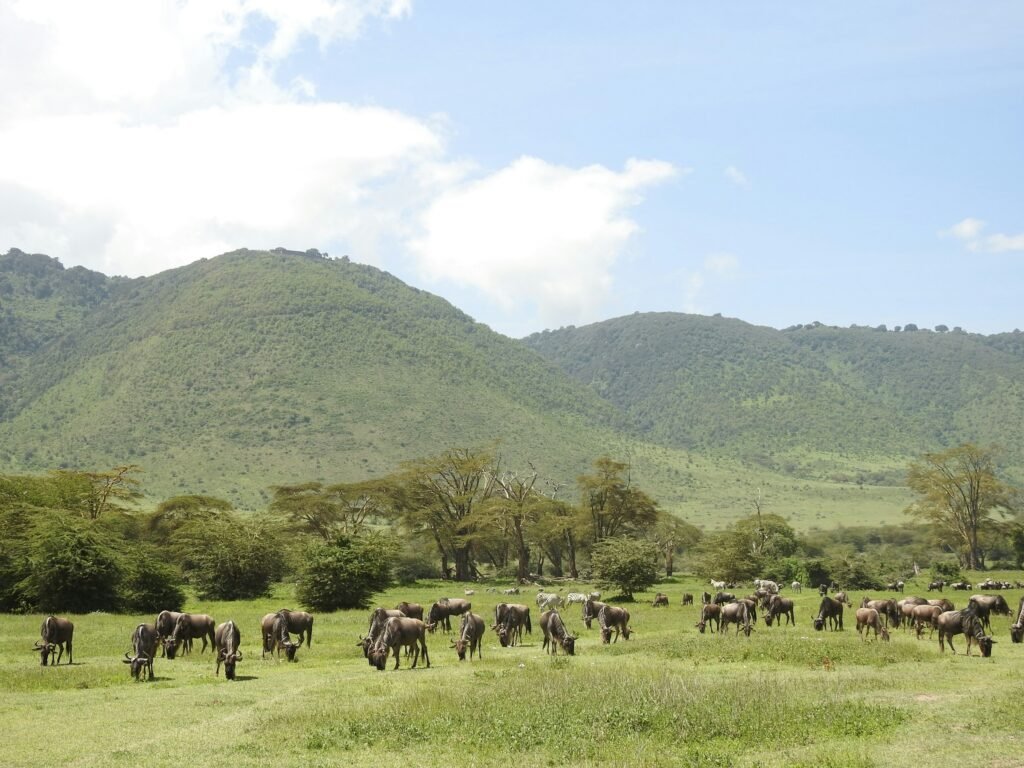
What makes the NCA unique globally is its status as a multiple land-use area. Unlike a national park, where human habitation is forbidden, the NCA is a pioneering experiment in coexistence. Here, you will see semi-nomadic Maasai pastoralists in their traditional red shukas herding cattle alongside zebras and wildebeests, a living tableau of man and nature that has remained unchanged for centuries.
Ngorongoro Conservation Area
The Ngorongoro Crater: A Natural Amphitheater
The crown jewel of the area is the Ngorongoro Crater, the world’s largest inactive, unbroken, and unfilled volcanic caldera. Formed when a giant volcano exploded and collapsed on itself some three million years ago, the crater floor now sits 600 meters (2,000 feet) below the rim.
Stepping onto the crater floor is like entering a natural amphitheater. Because of the enclosed nature of the caldera, a resident population of over 25,000 large mammals lives here year-round. It offers perhaps the easiest Big Five viewing in Africa.
- The Black Rhino: The crater is one of the few places in Tanzania where you are almost guaranteed to see the highly endangered East African black rhino.
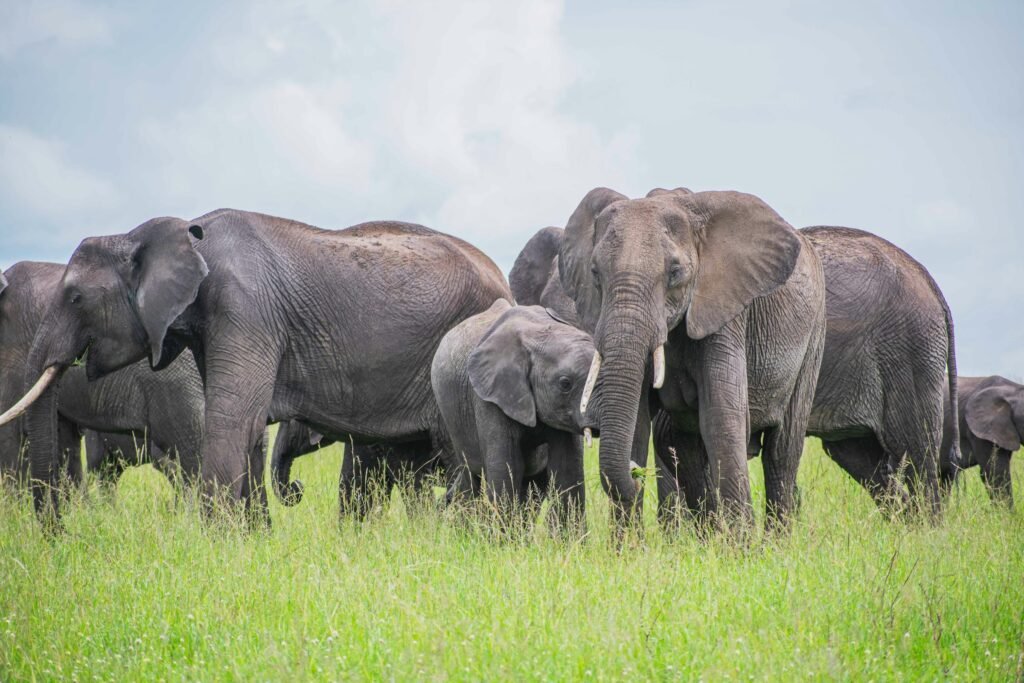
- The Giant Tuskers: The swamps of the crater floor are a retirement home for some of Africa’s oldest and largest bull elephants, sporting tusks that nearly reach the ground.
- Predator Density: The crater has one of the highest densities of lions and spotted hyenas in the world, leading to frequent and dramatic hunting displays.
Beyond the Crater: The Highlands and Embuakai
For the traveler seeking solitude away from the safari vehicles, the Ngorongoro Highlands offer a rugged, misty escape.
- Empakaai Crater: Much smaller than Ngorongoro, this hidden gem is famous for the deep alkaline lake that fills half its floor. It is a hiker’s paradise; you can trek down the steep, forested slopes to the lake shore, often surrounded by thousands of pink flamingos and the sounds of tropical birds.
- Olmoti Crater: Perfect for a morning walking safari, the trail leads through mountain forest to the rim, where you can see the Munge River cascading down the cliffs in a spectacular waterfall.
- Olduvai Gorge: Known as the “Cradle of Mankind,” this steep-sided ravine is where Louis and Mary Leakey discovered some of the earliest hominid fossils. A visit to the museum here is a humbling journey into our own origins as a species.
The Great Migration Link: The Ndutu Plains
The NCA isn’t just a static destination; it plays a vital role in the Great Wildebeest Migration. Between December and March, the short-grass plains of Ndutu (which straddle the border of the Serengeti and Ngorongoro) become the center of the universe.
This is the Calving Season. The volcanic soil here is rich in phosphorus and calcium, providing the necessary nutrients for pregnant wildebeest. In a window of just a few weeks, hundreds of thousands of calves are born, attracting an incredible concentration of cheetahs, lions, and leopards looking for an easy meal.
Ngorongoro Conservation Area
Seasonal Guide and Logistics
| Feature | Best Months | Why? |
| Crater Floor Safari | June – Oct | Dry grass makes wildlife easy to spot; animals cluster at water holes. |
| The Calving (Ndutu) | Jan – Feb | The peak of the migration in the southern sector; high predator action. |
| Highland Trekking | June – Aug | Cooler temperatures and clear skies for panoramic views of the Rift Valley. |
The Luxury Collection
Staying on the rim of the crater provides a view that is frequently cited as the best in the world.
- Ngorongoro Crater Lodge: Often described as “Versailles meets Maasai,” this lodge features stilted suites with ornate chandeliers, silk curtains, and floor-to-ceiling windows overlooking the caldera.
- The Highlands (Asilia): A collection of futuristic glass-and-canvas domes set high on the slopes of the Olmoti volcano, offering a more contemporary and secluded mountain experience.
- Entamanu Ngorongoro: A sustainably designed camp that offers views of both the Crater to the east and the Serengeti plains to the west, the ultimate best of both worlds.