
Serengeti National Park: The Soul of the African Wild
Welcome to the Serengeti National Park, a place where the earth still whispers the secrets of the ancient world. Spanning approximately 14,750 square kilometers (5,700 square miles) of northern Tanzania, the Serengeti is more than just a wildlife sanctuary; it is a global icon of nature’s raw, unyielding power. The name itself is derived from the Maasai word Siringet, meaning the place where the land moves on forever, a fitting description for a horizon that seems to stretch into infinity.
As we move through 2026, the Serengeti remains the gold standard for the African safari. It is a UNESCO World Heritage site, a Biosphere Reserve, and the stage for the greatest terrestrial mammal migration on Earth. At Frena Adventures, we believe that to visit the Serengeti is to witness the very heartbeat of the planet.
Serengeti National Park
The Living Geography: A Land of Four Regions
The Serengeti is not a uniform landscape; it is a complex tapestry of four distinct ecological zones, each offering a unique atmosphere and specialized wildlife encounters.
The Southern Plains (The Endless Grasslands)
This is the quintessential Serengeti. From the Naabi Hill Gate to the Ndutu region, the south is dominated by short-grass plains that are virtually treeless. This openness is a photographer’s dream, providing unobstructed vistas of the horizon. Underneath the soil lies a layer of volcanic ash from the nearby Ngorongoro highlands, creating a nutrient-rich environment that supports the massive herds during the calving season.
The Central Serengeti (Seronera Valley)
Known as the Big Cat Capital, the Seronera Valley is the heart of the park. Fed by the Seronera River, this area provides permanent water and lush vegetation year-round. It is characterized by yellow-fever acacia trees and Kopjes—ancient granite rock outcrops that rise like islands from the sea of grass. These kopjes are the preferred lounging spots for lions and leopards, who use the elevation to survey their kingdom.
The Western Corridor (The Grumeti)
The West is a wilder, more remote sector defined by the Grumeti and Mbalageti Rivers. The landscape transitions into savannah and open woodlands. This region is famous for its black cotton soil and the massive Nile crocodiles that inhabit the rivers, waiting for the migration to arrive in the early months of the dry season.
The Northern Serengeti (The Mara River)
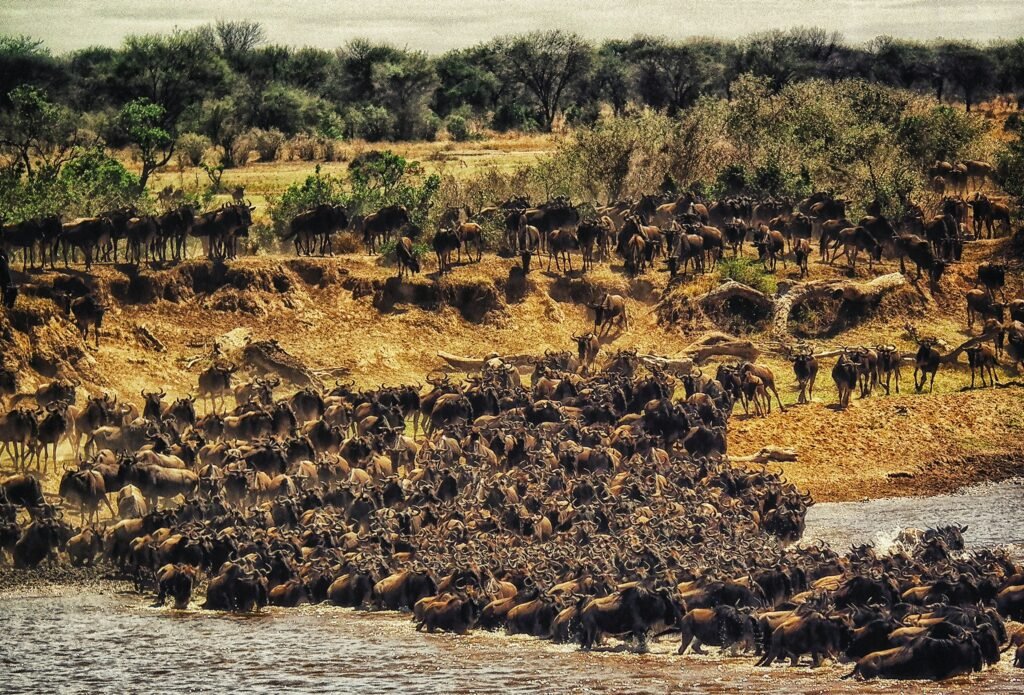
The North is a rugged landscape of rolling hills and dense woodlands. It is here that the Serengeti meets Kenya’s Masai Mara. The northern sector is the most dramatic during the late dry season, as the landscape becomes the site of the perilous Mara River crossings.
The Great Migration: The Greatest Show on Earth
The movement of over 1.5 million wildebeest, 250,000 zebras, and hundreds of thousands of gazelles is not a single event, but a continuous, clockwise cycle. Understanding the 2026 migration calendar is essential for planning your expedition.
- January – March (The Calving Season): The herds gather on the nutrient-rich southern plains of Ndutu. In February, a remarkable synchronized birthing occurs, where roughly 8,000 wildebeest calves are born every single day. This abundance of easy prey draws every predator in the ecosystem, from lions to cheetahs and hyenas, creating a high-stakes drama of life and death.
- April – May (The Long Rains): As the plains dry, the herds begin moving northwest. This is the Emerald Season. While the rains can make some roads challenging, the park is lush, the dust is gone, and the exclusivity is at its peak.
- June – July (The Western Crossing): The herds funnel into the Western Corridor. They face their first major test at the Grumeti River, where giant crocodiles and deep waters take their toll.
- August – October (The Mara River Drama): The herds reach the northern Serengeti. The Mara River crossings are the stuff of legends—a chaotic, thundering rush of animals plunging into the water to reach the green pastures of the north.
- November – December (The Return): With the onset of the short rains, the herds begin their southern trek through the eastern Serengeti, completing the circle to start the cycle again.
The Big Five and Beyond
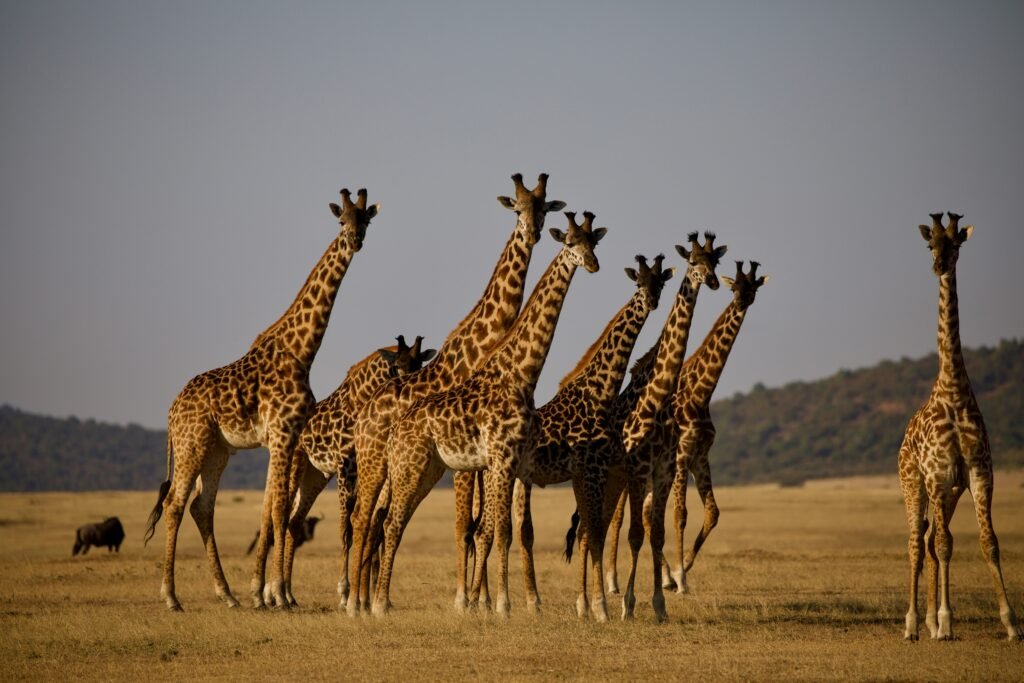
While the migration is the main attraction, the Serengeti’s resident wildlife is world-class throughout the year.
- Lions: The Serengeti supports one of the largest lion populations in Africa (roughly 3,000 individuals). Prides here can be enormous, sometimes numbering over 40 members.
- Leopards: These solitary cats are masters of disguise. In the Seronera region, they are frequently seen draped over the branches of sausage trees or hiding in the crevices of the Moru Kopjes.
- Elephants: The park’s elephant population has seen a healthy recovery, with large herds often seen moving through the northern and western woodlands.
- Rhinos: The rarest of the Big Five, black rhinos are primarily found in the highly protected Moru Kopjes and northern sectors.
- Cheetahs: The flat plains of the south and east are the cheetah’s preferred hunting grounds, where their incredible speed can be fully utilized.
The Human Spirit: The Maasai People
The story of the Serengeti is inseparable from the Maasai people, the semi-nomadic pastoralists who have coexisted with these lions and plains for centuries. While the park itself is a protected area for wildlife, the surrounding Loliondo and Ngorongoro regions are home to authentic Maasai Manyattas (villages).
We facilitate respectful, private cultural encounters where you can learn about:
- The Adumu Dance: The iconic jumping dance of the warriors.
- Traditional Medicine: How the Maasai use the acacia and scrub bushes for healing.
- A Living Philosophy: Understanding a culture that measures wealth in cattle and children, and whose life is dictated by the rhythms of the rain.
Signature Serengeti Experiences for 2026
The Hot Air Balloon Safari
There is no feeling quite like floating silently over the savannah as the sun begins to peek over the horizon. From the air, the scale of the migration becomes clear, you see the columns of wildebeest stretching for miles. The flight ends with a traditional bush breakfast and champagne under a lone acacia tree.
Walking Safaris: The Ultimate Immersion
In select private concessions and designated park areas, we offer guided walking safaris. Guided by an elite ranger and a Maasai tracker, you leave the vehicle behind to focus on the Little Five, learn to read tracks in the dust, and experience the thrill of being on the same level as the wildlife.
Private Kopje Sundowners
After a long game drive, we arrange for a private table to be set up on a secluded granite kopje. With a gin and tonic in hand, you can watch the sky turn from gold to violet, listening to the first calls of the nocturnal hunters as they wake up.
Luxury in the Wild: Where to Stay in 2026
The Serengeti offers some of the most sophisticated lodging in the world, blending modern indulgence with an Old Africa soul.
| Lodge | Region | Signature Vibe |
| Singita Sasakwa | Grumeti Reserve | Edwardian manor style with infinity pools and private 350,000-acre access. |
| Four Seasons Safari Lodge | Central | Elevated walkways and a pool overlooking a busy elephant watering hole. |
| Namiri Plains | East | Remote, modern eco-tents in a region famous for cheetah and lion research. |
| Sayari Camp | North | High-design suites located minutes away from the Mara River crossing points. |
| Mwiba Lodge | South | Sophisticated stone suites set among massive boulders and ancient fig trees. |
Planning Your Expedition (FAQ)
How do I get there?
Most Frena guests choose a Fly-In safari. You can fly from Arusha or Kilimanjaro International (JRO) directly to airstrips like Seronera, Kogatende, or Sasakwa, saving hours of bumpy roads.
What should I pack?
Layers are essential. The Serengeti can be surprisingly chilly at dawn and scorching by midday. Stick to safari colors—khaki, tan, and olive, and avoid dark blue or black, which attract tsetse flies.
Is it safe?
Absolutely. Our guides are experts in animal behavior and park safety. While you are in the heart of the wild, our lodges are secure, and your well-being is our primary focus.
Serengeti National Park
The Frena Touch: The Serengeti & Beyond Extension
We recommend pairing your Serengeti adventure with a descent into the Ngorongoro Crater, the world’s largest intact caldera, or a relaxing finale on the white sands of Zanzibar.