Earth’s Ultimate Theatre of Survival
The Great Wildebeest Migration is not merely a seasonal event; it is a relentless, ancient loop of life, death, and renewal that defines the East African ecosystem. For the discerning traveler, witnessing this pilgrimage with Frena Adventures means moving beyond the crowded tourist circuits to secure a front-row seat to one of nature’s most raw and cinematic spectacles.
We specialize in Migration Architecting, positioning you at the right river crossing or calving glade, at the precise moment, in total exclusivity.
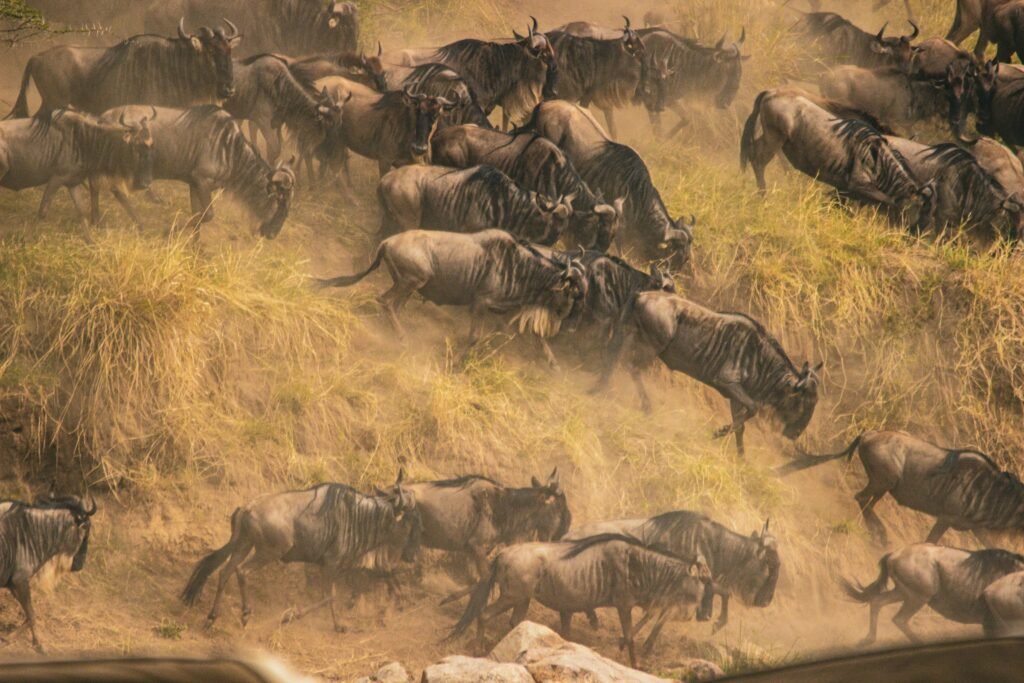
The Great Migration
The Great Migration Cycle: A 1,200-Mile Odyssey
The migration is a year-round movement of over 1.5 million wildebeest, 200,000 zebras, and 300,000 Thompson’s gazelles across the Serengeti-Mara ecosystem.
- The Calving Season (January – March)
Location: Southern Serengeti & Ndutu Region (Tanzania)
- The Spectacle: Within a three-week window, roughly 500,000 wildebeest calves are born. It is a time of incredible abundance and high-stakes drama as lions, cheetahs, and hyenas take advantage of the vulnerable young.
- The Frena Experience: We utilize luxury mobile camps that sit directly on the edge of the calving plains, allowing for dawn-to-dusk photography without the long drives.
- The Rut and the Trek (April – June)
Location: Central & Western Serengeti (Tanzania)
- The Spectacle: As the southern plains dry out, the herds move north and west. This is the rutting season—a noisy, energetic time of mating. The herds begin to congregate at the Grumeti River.
- The Frena Experience: We focus on the Grumeti Reserve, a private concession offering exclusive access to river crossings away from the main park crowds.
- The Great River Crossings (July – October)
Location: Northern Serengeti (Tanzania) & Maasai Mara (Kenya)
- The Spectacle: This is the most iconic phase. The herds face the gauntlet of the Mara River, where crocodiles lie in wait. It is a scene of pure adrenaline and survival of the fittest.
- The Frena Experience: We arrange private helicopter transfers between the Serengeti and the Mara to follow the herds, and secure permits for the most secluded viewing points.
- The Return South (November – December)
Location: Eastern Serengeti (Tanzania)
- The Spectacle: With the onset of the short rains, the herds begin their trek back to the nutrient-rich grasses of the south, closing the 800km loop.
Seasonal Guide to the Migration
| Month | Region | Country | Wildlife Activity |
| Jan – March | Southern Serengeti | Tanzania | Calving & high predator action. |
| April – May | Central Serengeti | Tanzania | Migration moving north; lush green scenery. |
| June – July | Western Corridor | Tanzania | Grumeti River crossings; giant crocodiles. |
| Aug – Oct | Maasai Mara / Northern Serengeti | Kenya / Tanzania | Iconic Mara River crossings. |
| Nov – Dec | Eastern Serengeti | Tanzania | Return journey; fast-moving herds. |
Frequently Asked Questions (FAQ)
When is the best time to see the migration?
There is no single best time, as the herds are always moving. However, July to September is the most popular for river crossings, while February is the best for seeing the calving and predator-prey interaction.
Is the migration predictable?
While the general route is consistent, the exact timing depends on the rain. At Frena Adventures, we stay in daily contact with rangers and pilots to move our guests to where the herds are currently gathered.
Can I see the migration in Uganda?
No, the Great Migration is exclusive to the Serengeti (Tanzania) and the Maasai Mara (Kenya). However, many Frena guests combine a migration safari with Gorilla Trekking in Uganda or Rwanda for the ultimate East African circuit.
How far in advance should I book?
For the river crossing season (July–September), luxury lodges and private camps are often booked 12 to 18 months in advance.
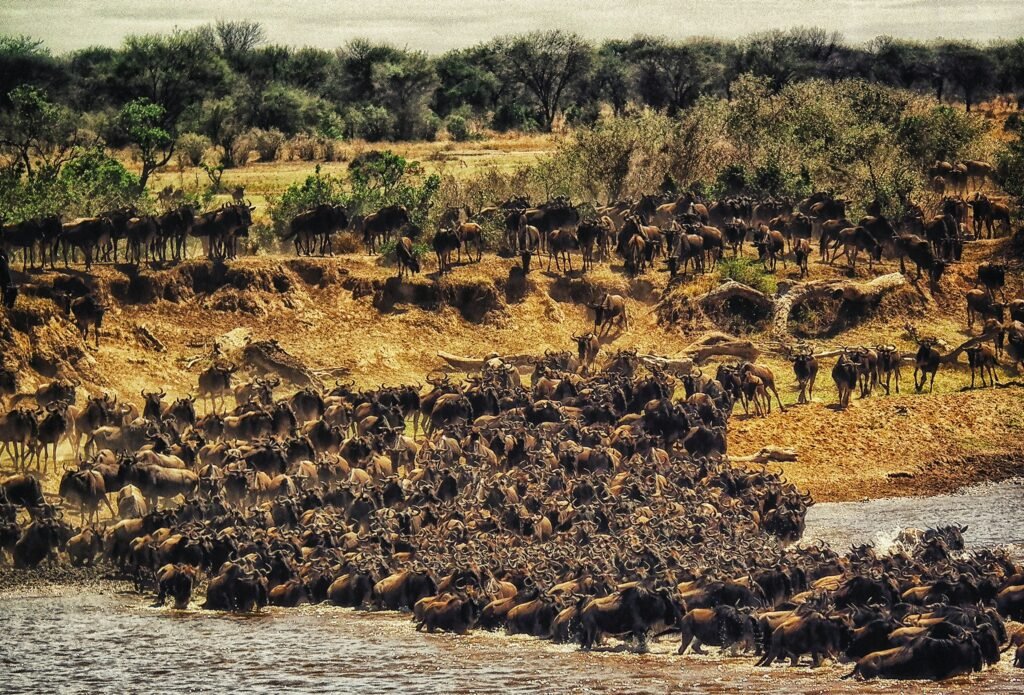
The Great Migration
The Migration Advantage
We understand that the migration is a sensory experience. Our itineraries include:
- Private Migration Specialists: Guides who understand the psychology of the herds to predict where they will cross.
- Fly-in Safaris: Avoiding the long, dusty transit roads to maximize your time in the heart of the action.
- Champagne Bush Breakfasts: Celebrating a successful morning of viewing in the shade of an acacia tree.